
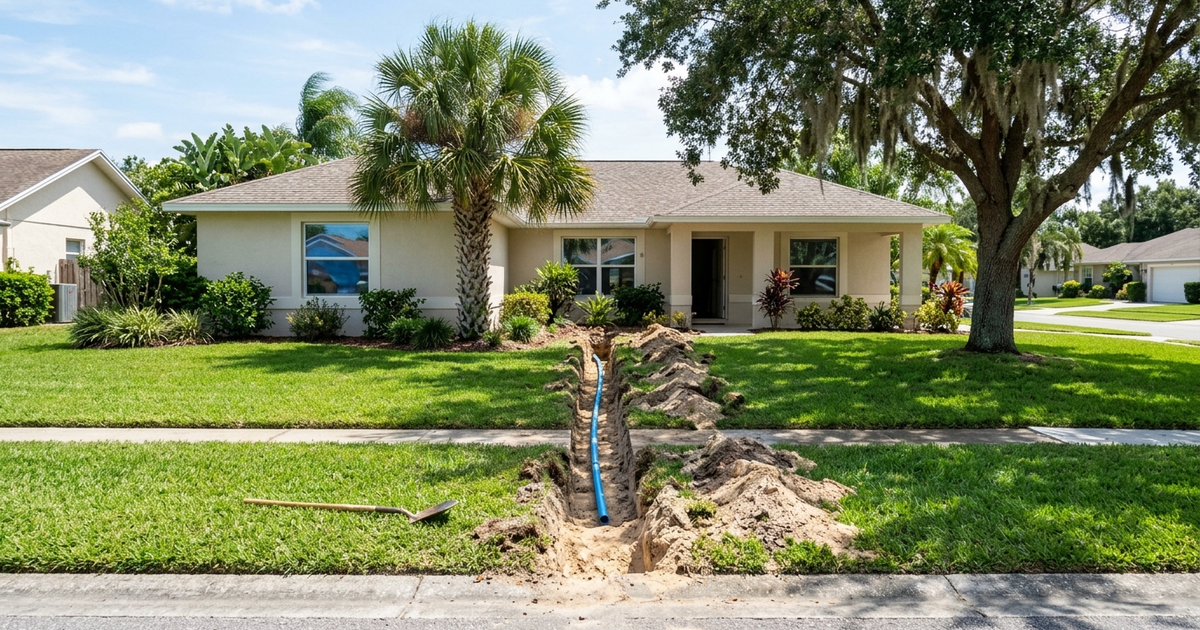
Repair your main water line when it is a newer pipe with one leak in one spot. Replace it when the line is polybutylene or old galvanized steel, when it has leaked more than once, or when the water at every tap is rusty, because patching a pipe that is wearing out along its whole length only moves the next leak a few feet down the yard.
Your main water line is the buried pipe that runs from the water meter to your house. Every tap, toilet and appliance depends on it. This guide walks Tampa homeowners through the signs of a failing line, how to decide between a repair and a full replacement, what shapes the price, and how to use the City of Tampa's leak adjustment once the leak is fixed. For a visit, see our main water line repair and replacement page or call (813) 773-6486.
Who Owns the Line From the Meter to Your House?
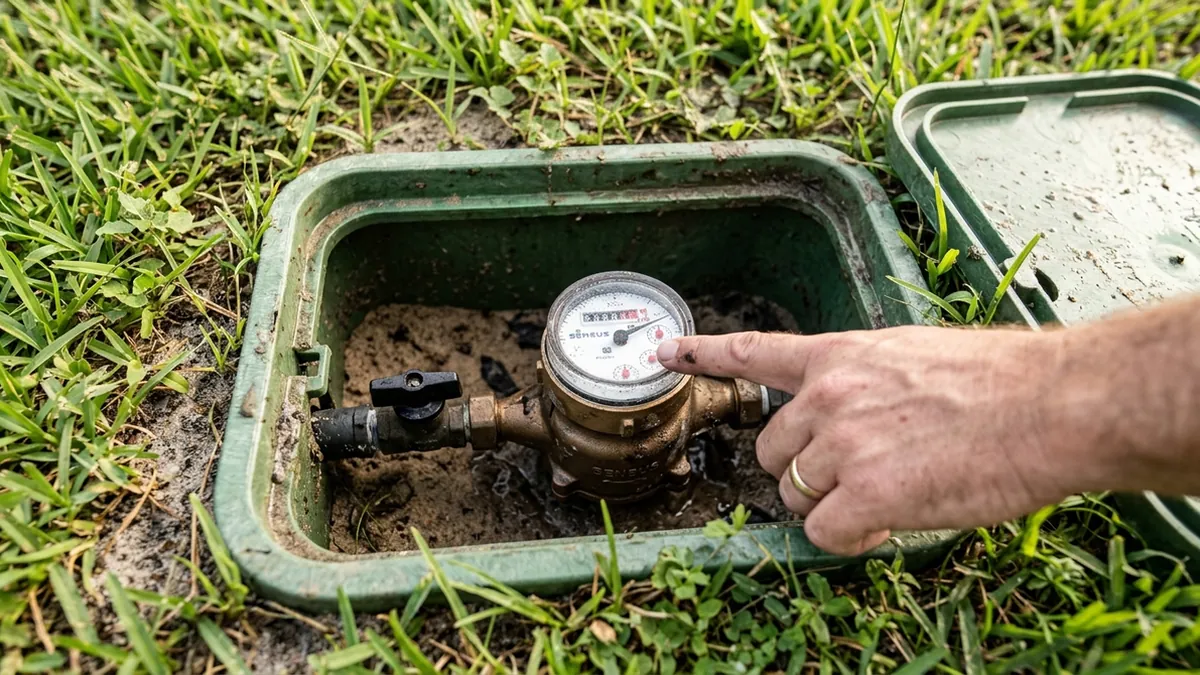
In most Tampa homes, the line from the meter to the house is yours to repair. The City looks after the main in the street and its side of the meter. The City of Tampa's water customer FAQ notes that the curb stop is City property, and says your own shutoff valve "is usually located in line with the meter box, low to the ground, sometimes behind bushes" on the house side.
If you are not sure where the City's part ends and yours begins, call the City of Tampa Utilities Call Center at (813) 274-8811 before you book any digging. Homes on other utilities, such as Hillsborough County or Pasco County water, follow their own rules, so check with your provider.
Signs Your Main Water Line Is Failing
A buried line leak rarely shows up indoors first. Look outside and at your bill.
- Pressure drops all over the house. When every tap is weak at once, the main line is often the cause, not one fixture.
- A soggy patch in a dry yard. A wet spot between the meter and the house, with no rain or sprinklers, can mean the pipe below is leaking.
- A water bill that jumps for no reason. A steady underground leak runs all day and night.
- The meter moves with every tap off. Turn off every tap, the ice maker and the irrigation, then watch the meter. If the dial still turns, water is leaking somewhere past it.
- Rusty or cloudy water at every tap. Old galvanized steel lines rust from the inside. Brown water everywhere can mean the line is near the end of its life.
- A dip in the lawn or a cracked walkway. A leak can wash sandy soil away and leave a sinking spot over the line.
When a Repair Makes Sense
A section repair means exposing the leak, cutting out the damaged piece of pipe and joining in a new one. It is the right call when:
- The line is fairly new. PVC, PEX or copper lines in good shape can often be patched once and keep going.
- There is one clear cause. A shovel strike, a root pressing on one joint or a fitting that failed at one point are local problems with a local fix.
- It is the first leak. One leak in an otherwise sound line does not mean the whole run is failing.
- The rest of the line tests well. Good pressure and clean water at every tap after the repair are good signs.
A repair digs less of your yard and costs less than a full new line. The trade-off is that it fixes one spot. If the pipe is wearing out all along its length, the next leak may already be forming.
When Replacement Is the Better Choice
A full replacement means laying a new line from the meter to the house. It usually makes more sense when:
- The line is polybutylene. Many Florida homes built from roughly 1978 to 1995 were plumbed with polybutylene, a grey plastic pipe that is prone to failure. If yours has leaked once, replacing the run is usually safer than patching it.
- The line is old galvanized steel. Galvanized pipe rusts from the inside, which narrows the pipe, lowers pressure and discolors the water. Patching one section leaves the rest still rusting.
- It has leaked more than once. Two or three leaks in a few years point to a pipe that is wearing out, not bad luck.
- Pressure is low even with no leak. A line that has narrowed with rust or scale can starve the whole house of water.
- You are planning other work. If you are repiping the house, redoing the driveway or landscaping over the line, it can make sense to replace the main line at the same time, before new pavers or sod go down.
A good rule of thumb: one leak in a sound pipe is a repair. A pattern of leaks, or a pipe material known to fail, is a replacement.
Pipe Materials You Will Find Under Tampa Bay Yards
What your line is made of changes the answer more than anything else.
| Material | Where you find it | Usual advice |
|---|---|---|
| Polybutylene (grey plastic) | Many homes built roughly 1978 to 1995 | Replace, especially after a leak |
| Galvanized steel | Older homes, often pre-1970s | Replace when it rusts or leaks |
| Copper | Many homes of different ages | Often repairable if the rest is sound |
| PVC or CPVC | Many newer homes | Often repairable |
| PEX | Newer subdivisions and recent repipes | Often repairable |
Not sure what you have? Look where the pipe comes out of the ground near the house or at the meter, or ask your technician to check at the visit. The City of Tampa also keeps a service line inventory at tampa.gov/KnowYourPipes.
What Shapes the Price of Main Water Line Work
We price by the job, not by the hour, and we do not quote over the phone because the price depends on what the technician finds at your home. These are the main factors:
- Repair or full replacement. Fixing one section costs less than a whole new line.
- Length of the run. A meter far from the house means more pipe and more digging.
- What sits on top. Driveways, pavers, patios and trees over the line change how the crew reaches it.
- Pipe material. Old polybutylene or galvanized lines are often replaced rather than patched.
- Access and soil. Room to dig and the condition of the soil around the pipe play a part.
We offer FREE on-site estimates! Our technician will visit your home, assess your plumbing needs, and provide an upfront quote before any work begins. Pricing is not provided over the phone. You get three options (repair, replace or prevent), each with a flat price, and nothing starts until you approve one. Financing is available, subject to credit approval.
How the Visit Works
- Check pressure and the meter. Your technician tests the pressure and watches the meter with everything off, to confirm the problem is in the main line before any digging.
- Give you three options. You get repair, replace and prevent options with flat prices.
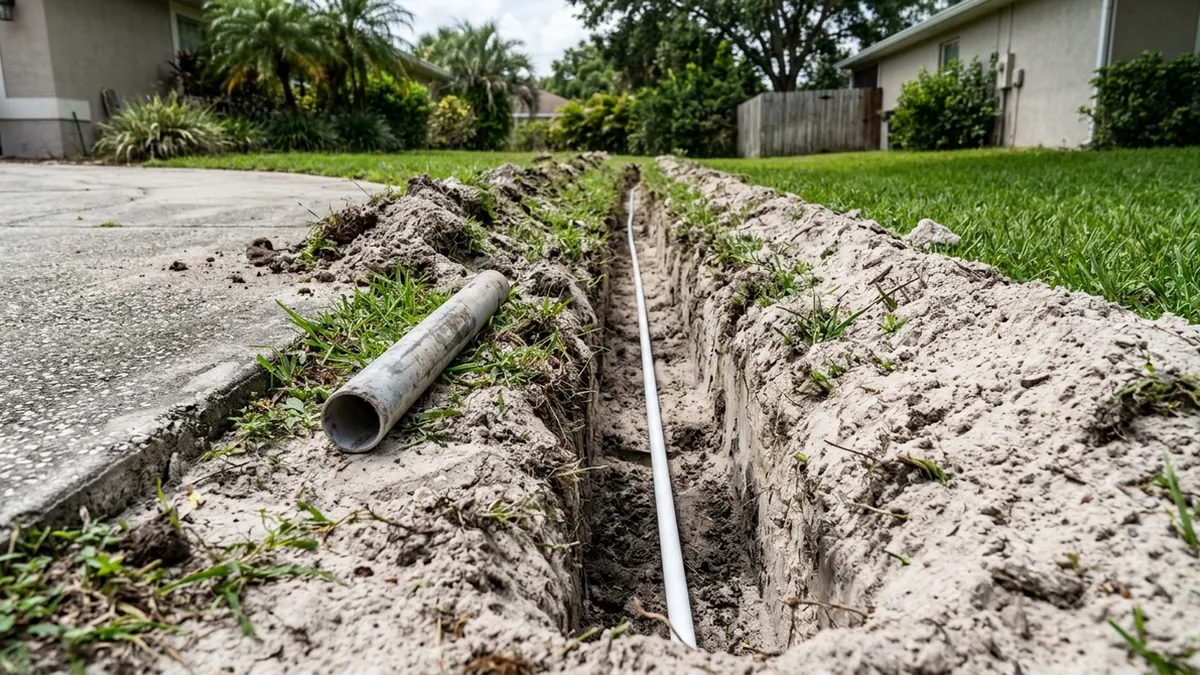
- Dig, fix and test. The crew exposes the pipe, repairs it or lays new line, then tests the pressure and restores your water.
- Walk you through it. You see what was done and get a paid invoice, which you will need for a leak adjustment.
Claiming a Leak Adjustment From the City of Tampa
A leak on your side of the meter can push your water bill up for a month or two. If you are a City of Tampa water customer, you may be able to get part of that back once the leak is fixed. According to the City's leak adjustment form and fact sheet:
- The leak must be repaired first. Adjustments are only considered after the repair.
- You need proof of repair. Only paid receipts or invoices are accepted, and estimates are not eligible. If a licensed professional did the work, the invoice should show the address, the date and a description of the repair.
- One adjustment per 12 months. Only one adjustment is allowed within a consecutive 12-month period.
- Reviews take time. The City says reviews may take up to 90 days, and asks you to keep paying your average monthly bill while it reviews the request.
You can send the request online through Tampa Connect, by fax or by mail, as the form describes. Keep your invoice somewhere safe after the job.
Main Water Line Work Across Tampa Bay
Most Tampa Bay homes sit on sandy soil, and a leak can wash it out and leave a dip over the pipe. Live oak roots also grow toward buried water lines. In Seminole Heights and in many 1960s and 1970s homes in Town 'n' Country, the original line may be decades old. Newer subdivisions in Wesley Chapel and Riverview often have PEX or CPVC.
We work from our shop on North Thatcher Avenue in Tampa and serve homes across Tampa Bay, including Brandon, Lutz, Odessa, Land O' Lakes, Clearwater and Largo. Call during office hours, Monday to Friday, 8am to 5pm, or call any time to reach our 24-hour live answering service, which books the soonest available appointment.
Get Your Water Line Checked
If your pressure has dropped, your yard has a wet spot that will not dry or your bill has jumped, have the line checked before the leak gets bigger. See our main water line repair and replacement page for how we handle the work, or request service. Every job is backed by our 100% Satisfaction Guarantee: if something isn't right, we send a technician back to make it right.