For many Tampa homes, yes. Hard water is common across much of Tampa Bay, and it leaves scale in your water heater, tankless unit, faucets and shower heads. A softener stops most of that scale at the source. It is worth it most when your water tests hard and you see spots, crust or short heater life.
This guide walks you through what hard water does, how to check your own water, and how a softener compares with a filter. It also covers sizing, salt, upkeep and the things that set the price. If you would rather talk it through, see our water softener installation page or give us a call.
Why This Matters for Tampa Bay Homes
Much of the water in our region comes from the limestone aquifer under Florida. As water moves through that rock, it picks up calcium and magnesium. Those minerals are what make water "hard." They are safe to drink, but they do not stay in the water when it heats up or dries.
When hard water dries on glass, it leaves white spots. When it heats up inside a tank, the minerals drop out and settle as scale. Over months and years, that scale builds up inside pipes, valves and appliances. You often do not see the damage until something stops working.
Where you notice it first
- White crust on faucets and shower heads
- Cloudy spots on glasses and dishes
- Soap that will not lather, so you use more
- Film on the tub and shower glass
- Stiff, rough towels after washing
Where it costs you money
The bigger cost is hidden inside your equipment. A tank water heater collects scale and sediment on the bottom. That layer sits between the burner or element and the water, so the heater works harder to do the same job. Many homeowners hear it as a popping or rumbling sound when the heater runs.
A tankless water heater has narrow passages inside its heat exchanger. Scale builds up there and can cut flow or trigger error codes. That is why tankless makers call for regular descaling in hard water. Our tankless water heaters page covers that service in more detail.
How to Check Your Water Hardness
You do not need to guess. There are two simple ways to find out how hard your water is, and both are worth doing before you buy anything.
Read your utility's water quality report
Every public water utility puts out a yearly water quality report. It lists the minerals in the water and often gives a hardness reading. In most of Tampa, that is the City of Tampa Water Department. Most unincorporated Hillsborough homes get water from Hillsborough County Public Utilities.
Pasco County Utilities serves much of Pasco. Pinellas County Utilities serves much of Pinellas, while Clearwater and St. Petersburg run their own water. Tampa Bay Water supplies the region and blends groundwater, river water and treated seawater. Because of that blend, your hardness can change over the year. Check your utility's annual report for the current figures.
Test the water at your tap
A test kit or test strip gives you a reading for your own home. This is useful because the report shows the water leaving the plant, not what comes out of your faucet. Your technician can also test your water at the visit and explain what the reading means for your home.
Well water on rural lots
Some homes on larger lots, in parts of Lutz, Odessa, Land O' Lakes, Valrico, Seffner and Ruskin, use a private well. Well water is not covered by a utility report, so a test is the only way to know. Well water can carry more minerals, and sometimes iron, which may change the equipment you need.
We handle the plumbing in your house and the lines out of it. We do not service well pumps. If you are on a well, test first, then talk to us about softening and filtration inside the home.
Water Softener vs Water Filter: Which One Do You Need?
People often use these two words for the same thing, but they do different jobs. Picking the wrong one is the most common mistake we see in hard water questions.
What a softener does
A softener swaps the hardness minerals for a small amount of sodium as water passes through a tank of resin beads. The beads hold the calcium and magnesium. Every so often, the system rinses the beads with salty water from a brine tank. That rinse is called regeneration, and it gets the beads ready to work again.
What a filter does
A filter removes or reduces things like chlorine, chloramine, sediment and some tastes and odors. Some utilities in our region use chloramine, a mix of chlorine and ammonia, and some people notice its taste or smell. A filter helps with that. Most filters do not remove hardness. You can read more on our water filtration systems page.
| Need | Softener | Filter |
|---|---|---|
| Stops scale | Yes | Rarely |
| Fixes chlorine taste | No | Yes |
| Uses salt | Yes | No |
| Protects water heater | Yes | No |
| Upkeep | Salt refills | Filter changes |
When you might want both
Many Tampa Bay homes have hard water and treated city water at the same time. If you see scale and also dislike the taste or smell, you may want both. In that setup, the filter usually goes first and the softener second. Our job photos include a Halo whole-home filtration install.
Sizing, Salt, Upkeep and Where It Goes
A softener has to fit your home. Too small and it runs out of capacity between rinse cycles. Too large and you pay for more than you need. Sizing is not hard, but it does take a few facts about your house.
How we size a softener
- How hard your water tests at the tap
- How many people live in the home
- Your bathrooms and water-using appliances
- Your pipe size and peak flow
With those facts, the technician picks a unit with enough capacity to go several days between rinses. You get soft water without the system running all the time.
Salt and day-to-day care
Most softeners use salt pellets in the brine tank. You check the level and top it up when it gets low. How often depends on your water and how much you use. A dry brine tank means the softener stops softening, so set a reminder to look.
Once a year, it is smart to have the system checked. A technician looks at the settings, the valve and the brine tank. Our membership plan includes an annual whole-home safety inspection, and you can ask about it when you call.
Where the softener goes
Most Tampa Bay homes sit on a concrete slab with no basement. So the softener usually goes in the garage, close to where the main water line enters the house. It needs a level spot, a drain for the rinse water and a power outlet for the control valve.
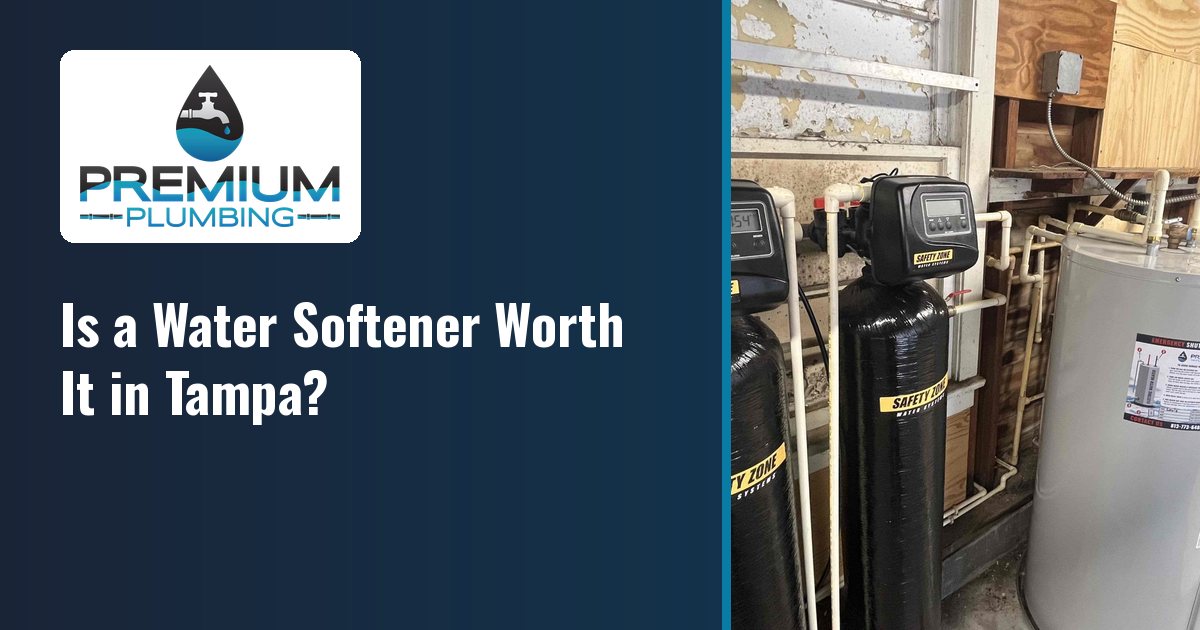
Garage installs are common here because they let the softener treat water before it reaches the water heater. That is the spot where it does the most good. Our photos show twin softener tanks set right next to a water heater, which is a typical layout.
What Affects the Cost of a Water Softener
We do not post prices online, because every home is different. What we can do is tell you what drives the price, so you know what to expect when we quote.
We give free quotes on installations and replacements. We price by the job, not by the hour. You approve the price before any work starts, and it won't change.
Cost factors to know
- Softener size and type
- Adding a filter at the same time
- Distance from the main line
- Whether a drain and outlet are in place
- Hauling away an old softener
- Repairs found near the install area
Ways to make it easier on your budget
Financing is available, subject to credit approval. You can also check our current offers, since coupons change monthly. New products carry the manufacturer's warranty, and we explain it at the visit.
Watch out for these
A very low quote may skip the bypass valve, the drain line or proper sizing. Ask what is included. Ask how the unit was sized, and whether it treats the water heater supply. A softener that only serves part of the house will not protect your heater.
Think about the long view, too. A softener helps your water heater, tankless unit, faucets and appliances last longer. You also use less soap and spend less time scrubbing spots off glass. For many homes with hard water, that adds up.
When to Call a Pro vs Doing It Yourself
Some softener tasks are easy for a homeowner. Others touch your main water line and your water heater, and those are better left to a licensed plumber.
Things you can do yourself
- Read your utility's water quality report
- Test your tap water with a kit
- Add salt to the brine tank
- Soak shower heads in vinegar
- Keep the bypass valve set to "service"
When to call a licensed plumber
Call us when you are adding a new softener, replacing an old one, or moving where it sits. The install means cutting into your main water line, adding a bypass, and running a drain. A mistake there can cause leaks, low pressure or water that bypasses the softener.
You should also call if you notice any of these signs. They can point to a softener problem or a heater full of scale.
- Water still feels hard
- Brine tank full of water
- Heater pops or rumbles
Our water heater repair team can check the heater at the same visit.
When you book, your technician gives you three options (repair, replace or prevent) before any work. Every service call also comes with a free plumbing safety inspection.
If you live outside Tampa
We cover all of Tampa Bay from our shop on Thatcher Avenue in north-west Tampa. Homeowners east of the city can read about water softeners in Brandon, and the same visit applies across Hillsborough, Pasco and Pinellas.
Need a Plumber in Tampa? Premium Plumbing Is Ready to Help
Hard water does not have to keep wearing down your heater and fixtures. We are locally owned and operated in Tampa, licensed and insured, Florida Certified Plumbing Contractor CFC1429217. A live person answers 24 hours a day and books the soonest available appointment. Call (813) 773-6486 or contact us to ask about free quotes on installations and replacements.