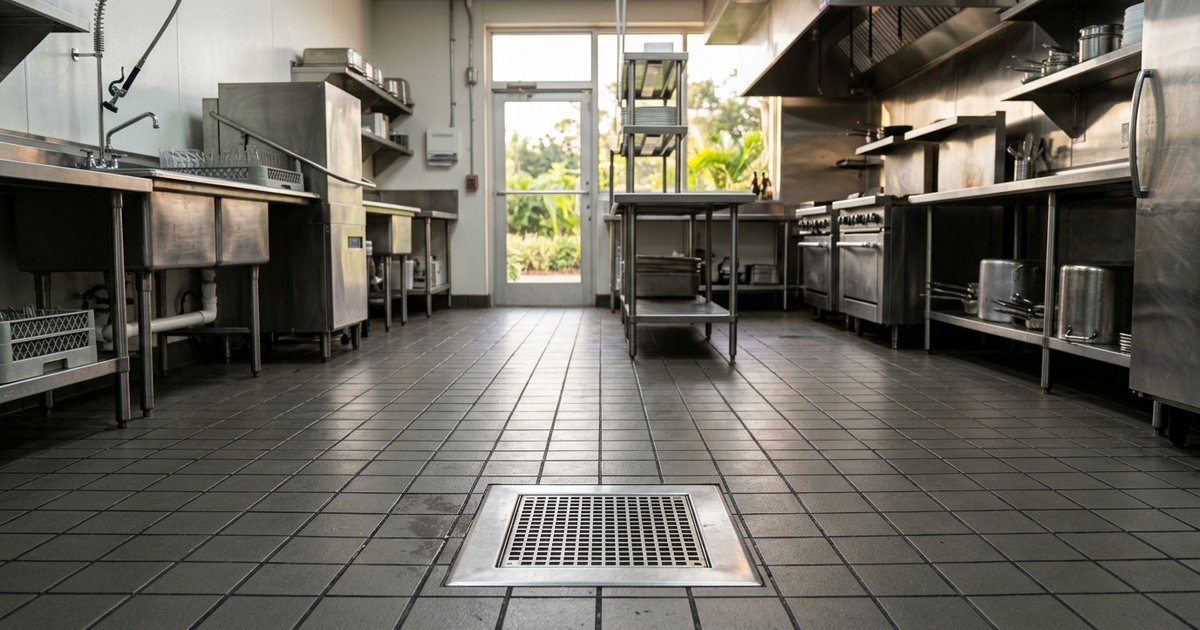
A Tampa business needs commercial drain cleaning when floor drains pool, restroom lines gurgle or back up, or the same clog returns within weeks. Grease is the usual cause in kitchens, and hydro jetting cleans the full pipe wall where a drain snake only opens a path through the blockage.
This guide is for restaurant owners, property managers and facility staff. It covers the signs that a line needs more than a plunger, how snaking and hydro jetting compare, what the City of Tampa expects from food service grease traps, and how to plan drain work so it disrupts your business as little as possible. If you already know you need help, see our commercial plumbing services or call (813) 773-6486.
Why Drain Problems Cost a Business More
A slow drain at home is a nuisance. At a business, it can close a restroom, stop a dish line or leave standing water on a kitchen floor. Customers notice, staff work around it, and a health or safety issue can follow.
Commercial lines also work much harder than household ones. A busy restaurant can send grease, food solids and hot water down its drains all day. An office building or a gym pushes far more flushes and showers through its pipes than a house ever will. More use means buildup forms faster and clogs come back sooner.
The cheapest drain call is the one you plan. Clearing a line on a weekday morning costs your business far less than a backup in the middle of a dinner rush.
Signs Your Business Needs Commercial Drain Cleaning
Some clogs are a quick fix at one fixture. Others point to a problem further down the line that serves the whole building. Watch for these:
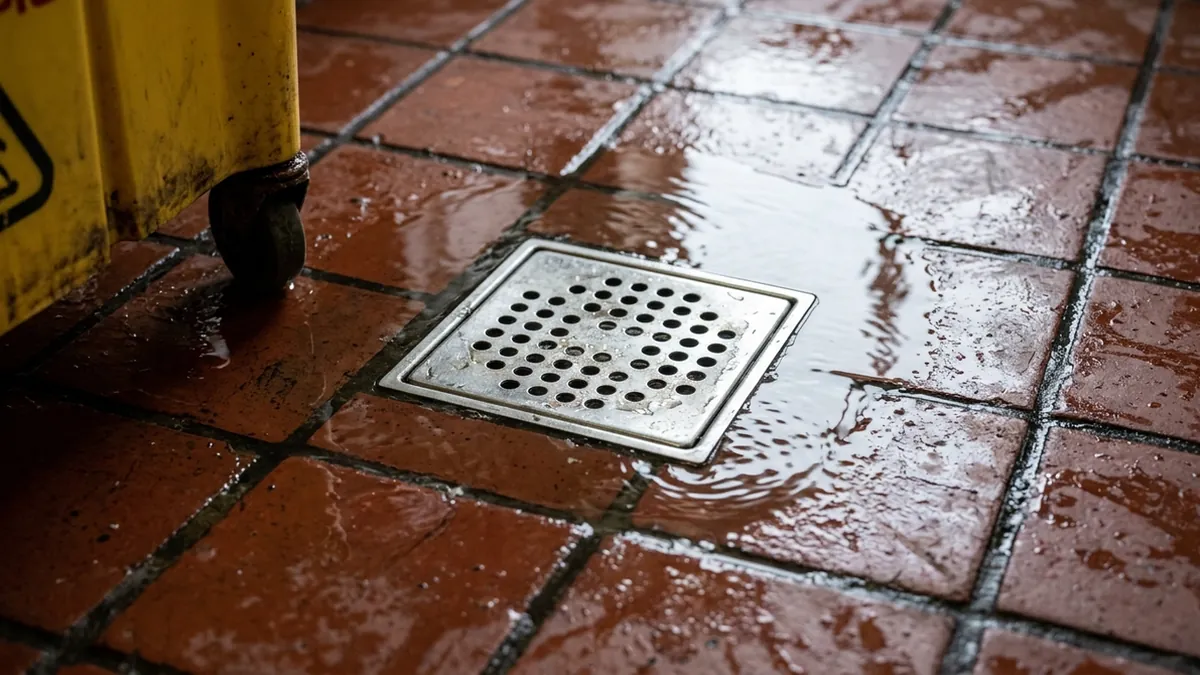
- Floor drains that fill or pool. In a kitchen or mechanical room, a floor drain that holds water after mopping or fills when equipment drains usually means the branch line is partly blocked.
- Several fixtures slow at once. When two or more sinks, toilets or floor drains slow down together, the clog is often in a shared line, not in one fixture.
- Gurgling from drains or toilets. Air pushing past a partial blockage bubbles up through the nearest opening. It often comes before a full backup.
- Sewer smell in restrooms or the kitchen. Odor near drains can mean waste is sitting in the line instead of flowing away.
- A clog that keeps coming back. If a line needs clearing every few weeks, something deeper is catching waste, such as grease buildup, a sag in the pipe or root intrusion.
- Water backing up when equipment runs. A floor drain that overflows when a dishwasher or ice machine discharges is a classic sign of a restricted line.
If you see more than one of these, it is time to have the line cleared properly rather than treated with store-bought products. Harsh chemical drain cleaners can also harm older pipes, and they rarely touch grease that has hardened on the pipe wall.
Snaking vs Hydro Jetting: Which Does a Commercial Line Need?
There are two main ways to clear a drain line, and each suits a different problem.
Drain snaking
A drain snake is a cable that cuts a path through the clog. It works well for hair, paper, soap and simple blockages, and it is the quicker, smaller job. The catch is that a snake opens a hole through the blockage but leaves much of the buildup on the pipe wall. In a grease-heavy kitchen line, that buildup can close the gap again before long.
Hydro jetting
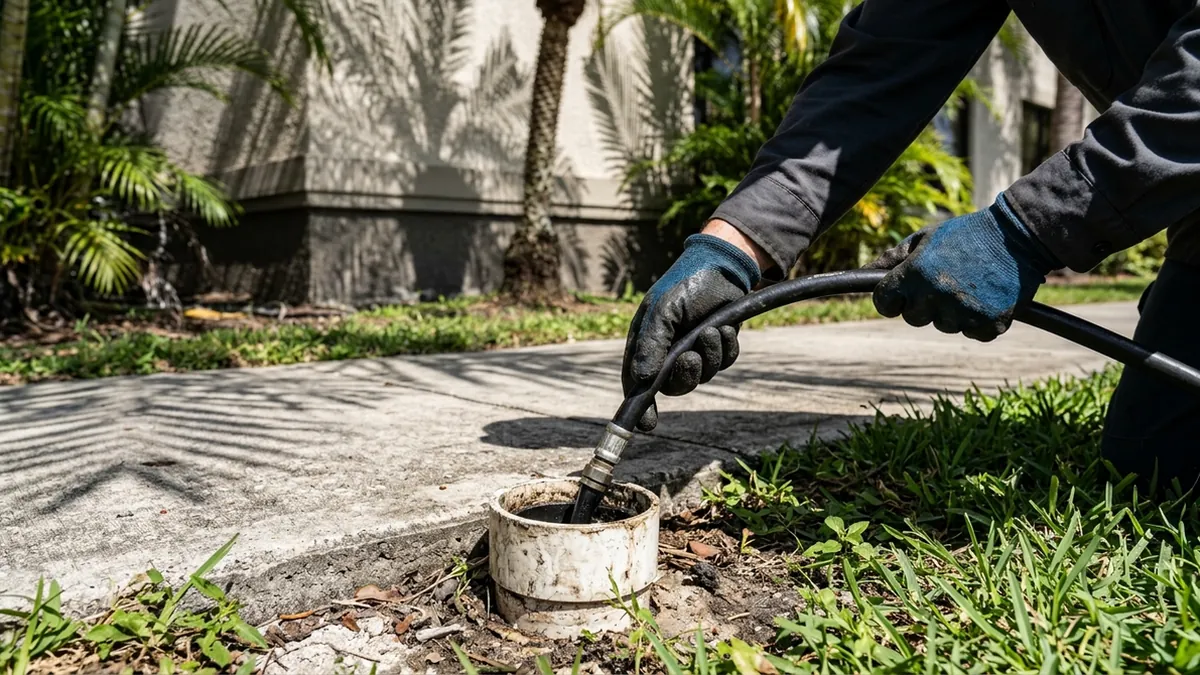
Hydro jetting uses a high-pressure water hose that scours the inside of the pipe. It removes grease, scale and sludge from the full pipe wall, so the line goes back closer to its full size. That is why hydro jetting is the usual choice for restaurant kitchen lines and for clogs that keep returning. Our jetter lives at the shop on Thatcher Avenue in north-west Tampa.
Hydro jetting is not right for every pipe. Badly rusted old cast iron can be fragile, so if a line is old or the problem is unclear, a camera look first is the safer step. A sewer camera inspection shows what is inside the pipe before anyone picks a method.
| Drain snaking | Hydro jetting | |
|---|---|---|
| Best for | Hair, paper, soap, simple clogs | Grease, scale, sludge, repeat clogs |
| What it does | Opens a path through the clog | Cleans the full pipe wall |
| Setup | Smaller, quicker job | More setup, deeper clean |
| Watch out for | Grease that closes the gap again | Fragile old cast iron (camera first) |
Your technician tells you which method fits your line, and you get options with flat prices before any work starts. You can read more about both methods on our drain cleaning and hydro jetting page.
Grease Traps and Tampa's Grease Rules
If you run a restaurant or any business with a commercial kitchen in the City of Tampa, your drains and your grease trap work together. A grease trap or interceptor catches fats, oils and grease before they reach the sewer. When it is overdue for pumping, grease slips past it and coats the lines downstream.
The City of Tampa runs a Grease Management Program for food service facilities. Its grease program FAQ says an interceptor must be pumped when the settled solids layer reaches the invert of the outlet pipe (typically eight inches deep), when grease and solids take up more than 25 percent of the interceptor's capacity, or when it stops capturing grease. Grease traps follow the same 25 percent rule.
What that means for your drains:
- Keep the trap on schedule. A full trap is one of the most common reasons kitchen lines clog. Check your pumping log before you book drain cleaning, because clearing a line while the trap is overflowing only buys a short break.
- Clear the lines on both sides of the trap. Grease builds up in the kitchen lines leading into the trap as well as in the line after it.
- Train your staff. Scraping plates into the trash and keeping fryer oil out of floor drains slows buildup more than any cleaning visit.
If you are in another city or county, such as Clearwater or St. Petersburg, check your own utility's grease rules. They are similar in spirit but the details differ.
How to Choose a Commercial Drain Cleaning Company in Tampa
Not every plumber works on commercial lines every week. When you compare companies, ask:
- Do you clean commercial lines and hydro jet in-house? A company with its own jetter can clear a grease-heavy line properly instead of snaking it and leaving.
- Will you check the line with a camera when the clog keeps coming back? Repeat clogs have a cause. A camera shows whether it is grease, a sag in the pipe, roots or a broken section.
- How do you price the job? A price by the job that you approve before work starts is easier to budget than an hourly rate that grows while the crew works. We price by the job, not by the hour, and the price you approve won't change.
- Can you work around our hours? A good commercial plumber plans with you, so a restroom or kitchen is out of service for as little time as possible.
- Are you licensed and insured? Ask for the Florida license number. Ours is CFC1429217, and we are licensed and insured.
Premium Plumbing started as a commercial plumbing company and added homes later. Our crews have worked on hotels, a high school, a hospital and a fitness center, so commercial drain lines are familiar ground.
What Shapes the Price of Commercial Drain Cleaning
We do not quote drain cleaning over the phone, because the price depends on what the technician finds. These are the main factors:
- Which line is blocked. One restroom sink costs less to clear than a main line that serves the whole building.
- The method. Hydro jetting takes more setup than snaking but cleans the full pipe wall.
- Access. An easy cleanout saves time. A line that can only be reached by pulling a toilet, or through a roof vent, adds steps.
- What is in the pipe. Heavy grease or roots take longer to clear than hair or paper.
- Camera work. A camera look adds a step but can save you from paying to clear the same line again next month.
We offer FREE on-site estimates! Our technician will visit, assess your plumbing needs, and provide an upfront quote before any work begins. Pricing is not provided over the phone. You get three options (repair, replace or prevent), and nothing starts until you approve one. Financing is available, subject to credit approval.
Planning Drain Work Around Your Business
The best time to clear a commercial line is before it backs up. A few habits help:
- Book cleaning during your slow hours. A weekday morning before opening is often easiest for restaurants and retail.
- Keep a simple log. Note when each line was cleared and the trap was pumped. A pattern of repeat clogs tells you when to schedule the next visit.
- Plan ahead of storm season. Heavy summer rain from roughly June to September can push water into the ground and strain older lines. Having drains cleared in spring means fewer surprises later.
- Ask about upkeep, not just repairs. If one line clogs every few months, a regular cleaning visit often costs less than repeated emergency calls.
Commercial Drain Cleaning Across Tampa Bay
We work from our shop on North Thatcher Avenue in Tampa and serve businesses across Tampa Bay, including Town 'n' Country, Brandon, Clearwater, Largo, St. Petersburg and Wesley Chapel. Older buildings, like the older homes in Seminole Heights and Hyde Park, may still have cast iron drains, which rust inside and catch waste. Newer buildings usually have plastic drain lines, which clear more easily but still collect grease.
Call during office hours, Monday to Friday, 8am to 5pm, or call any time to reach our 24-hour live answering service. A live person answers and books the soonest available appointment, with same-day appointments when the schedule allows.
Get Your Commercial Drains Cleared
If your floor drains are pooling, a restroom keeps backing up or your kitchen line clogs every few weeks, it is time for a proper cleaning. See our commercial plumbing services for the full range of work we do for businesses, or request service and tell us which drains are giving you trouble. Every job is backed by our 100% Satisfaction Guarantee: if something isn't right, we send a technician back to make it right.